
Steel piling and anchoring – A solid foundation for sustainable construction
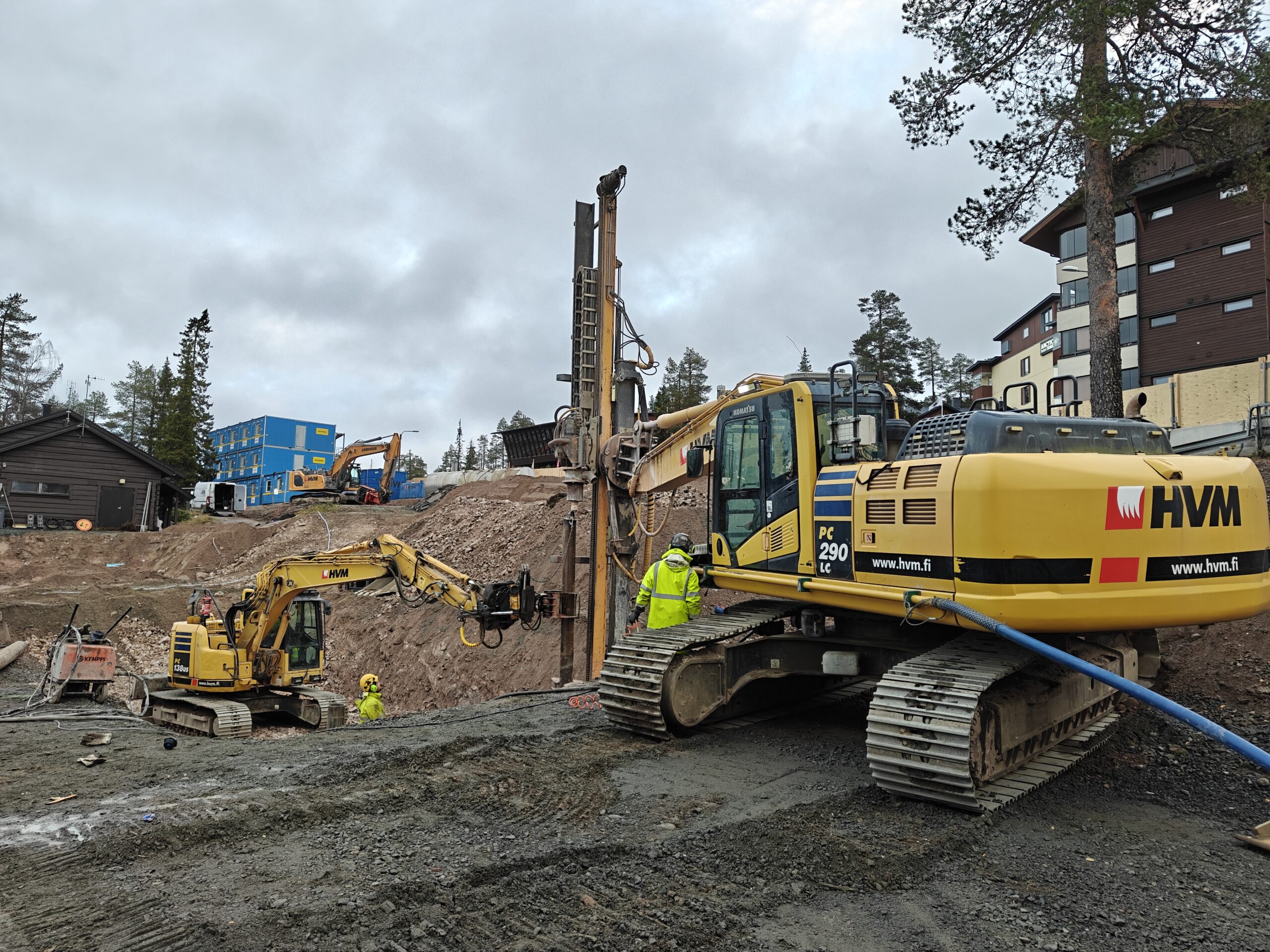
We provide steel piling and anchoring as a full service from design to implementation according to the customer’s needs. Our equipment is versatile and capable of handling even the most demanding piling jobs.
Steel piling and anchoring in Finland & Northern Sweden
Steel piling is a foundation method where the loads of a building or other structure are transferred to the bearing soil by steel tubular piles. The pipe piles are drilled or driven into the bearing soil or rock to achieve sufficient bearing capacity even in soft ground and under variable conditions. Drilled piling allows the penetration of rocks and difficult fill layers and secure rock contact, whereas in driven piling the steel piles are driven into the ground by impact.
The method is particularly suitable for applications where a secure and durable foundation is required – such as bridges, industrial buildings, harbour structures, wind turbines and other heavy infrastructure. The type of pile and the installation method are always chosen according to the site conditions and the requirements of the structure.
The advantages of steel piling are fast installation, high load-bearing capacity, precise installation and good suitability even in confined or difficult conditions. Professionally executed steel tube piling offers a sustainable solution for both new and renovation construction, where the goal is a safe and long-lasting foundation. Piling also brings predictability to the project schedule, cost-effectiveness and stability to the entire construction project.
Impact-driven piling
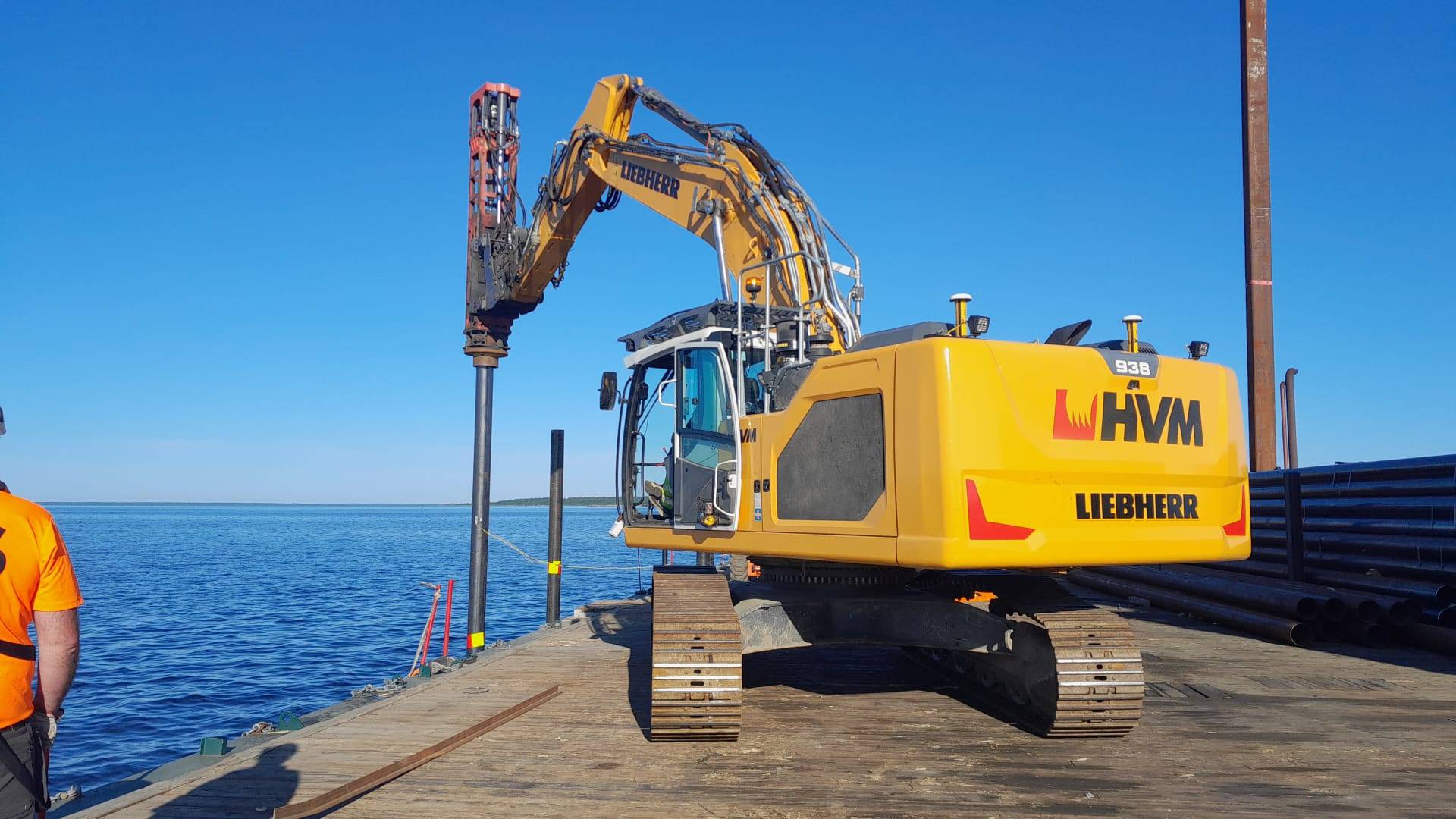
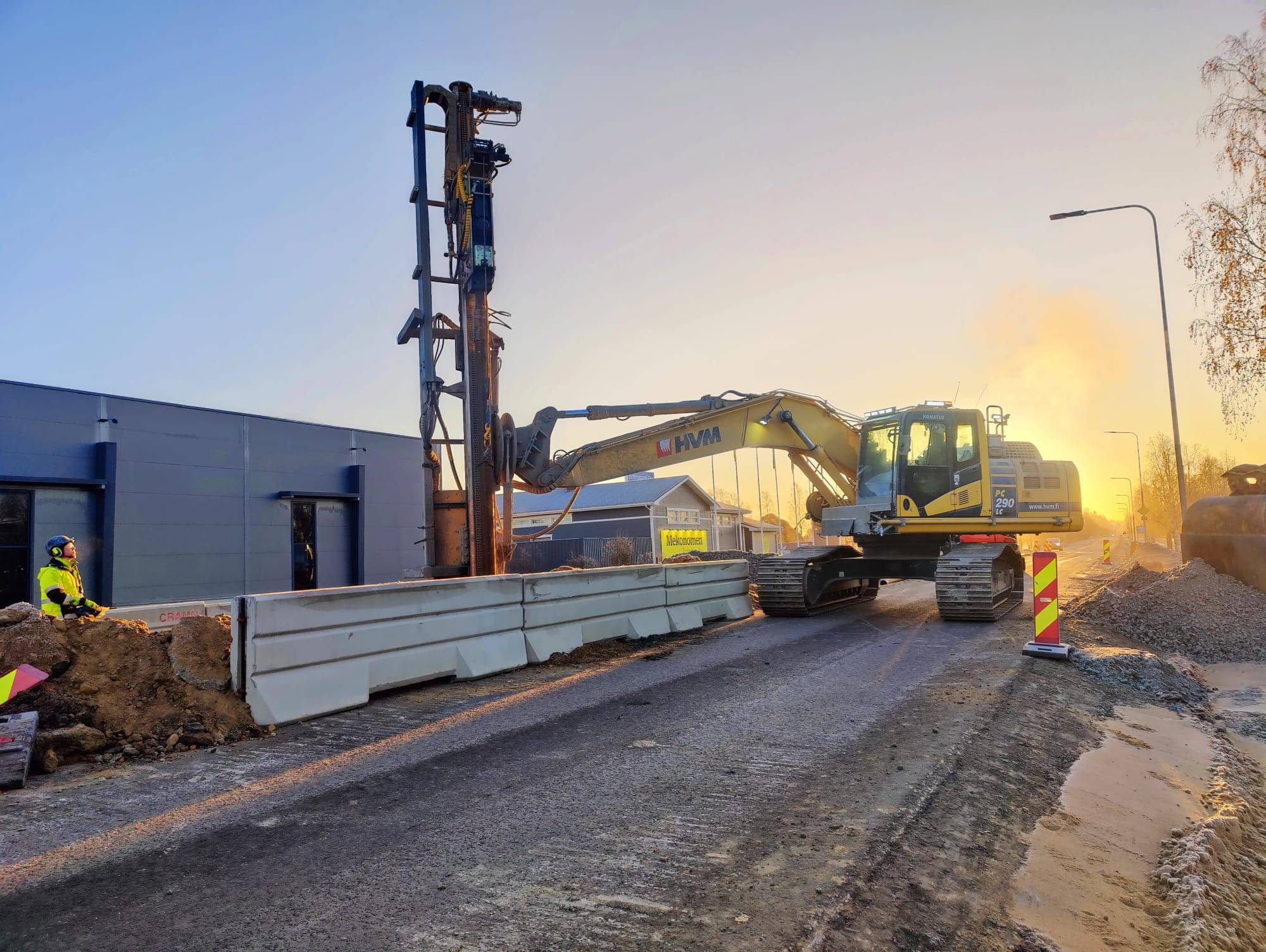
Our impact pile driving equipment is excavator-mounted and we perform impact pile driving up to size RR320 with a Movax dropping bucket.
Drill piling
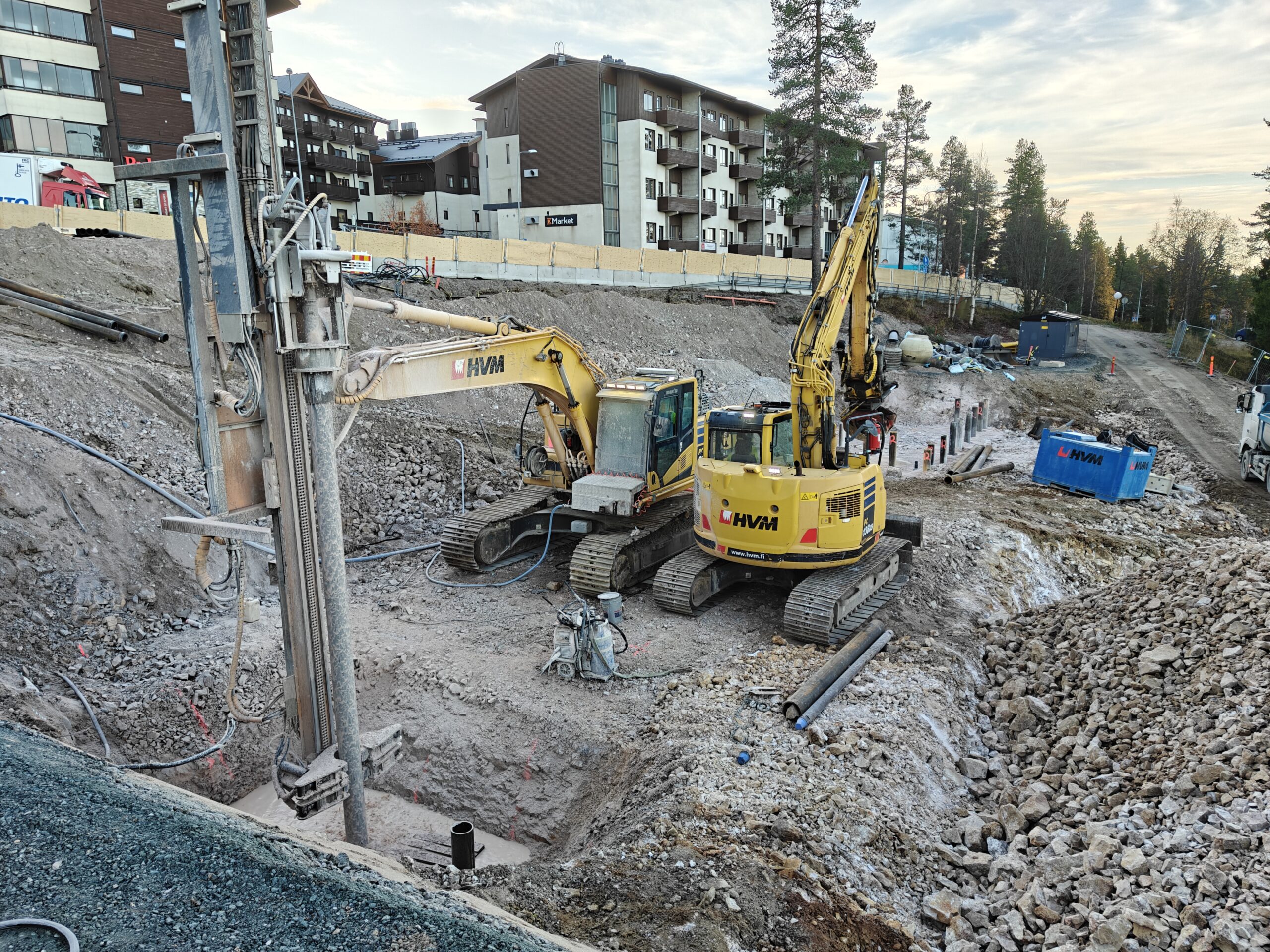
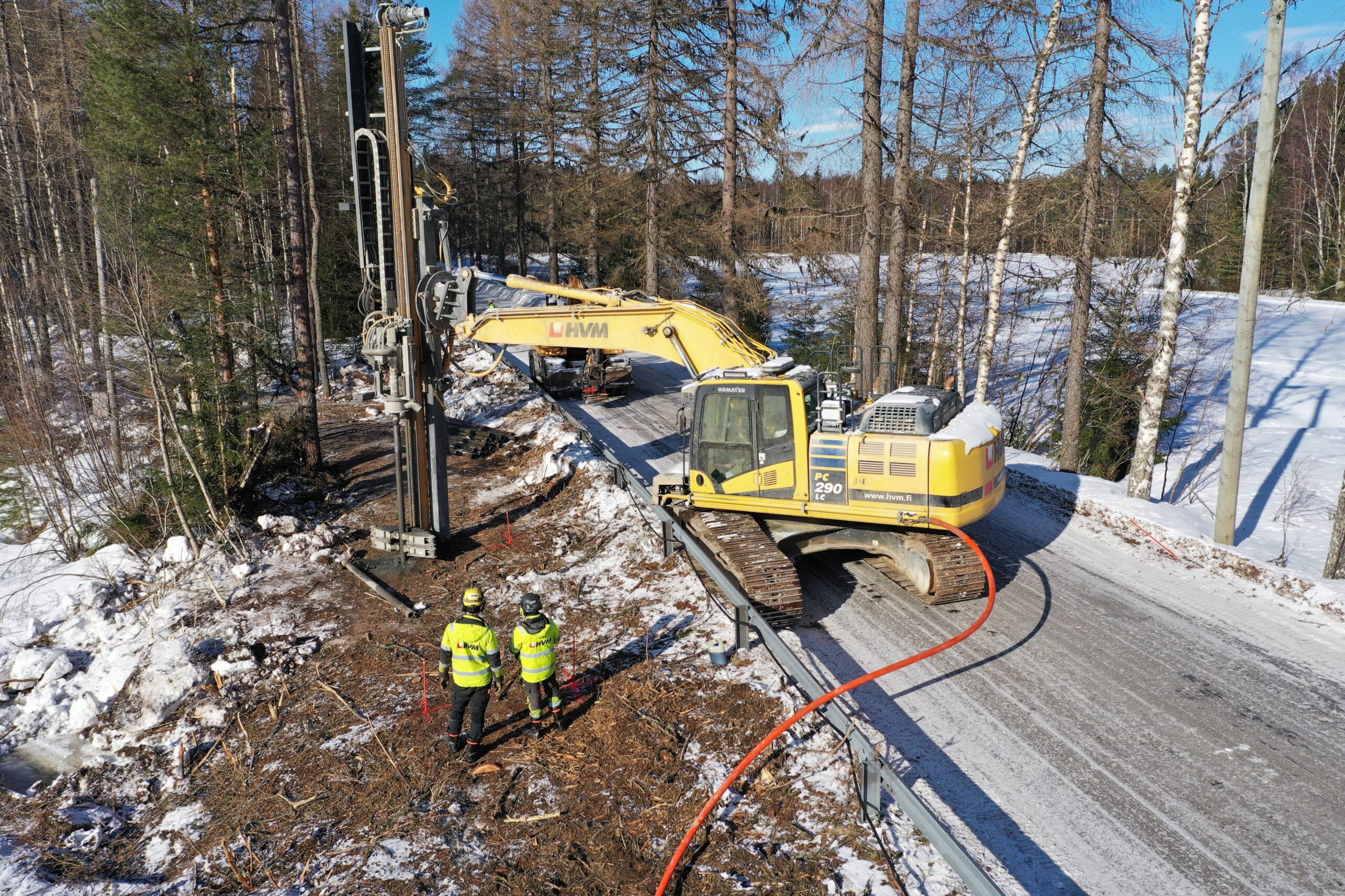
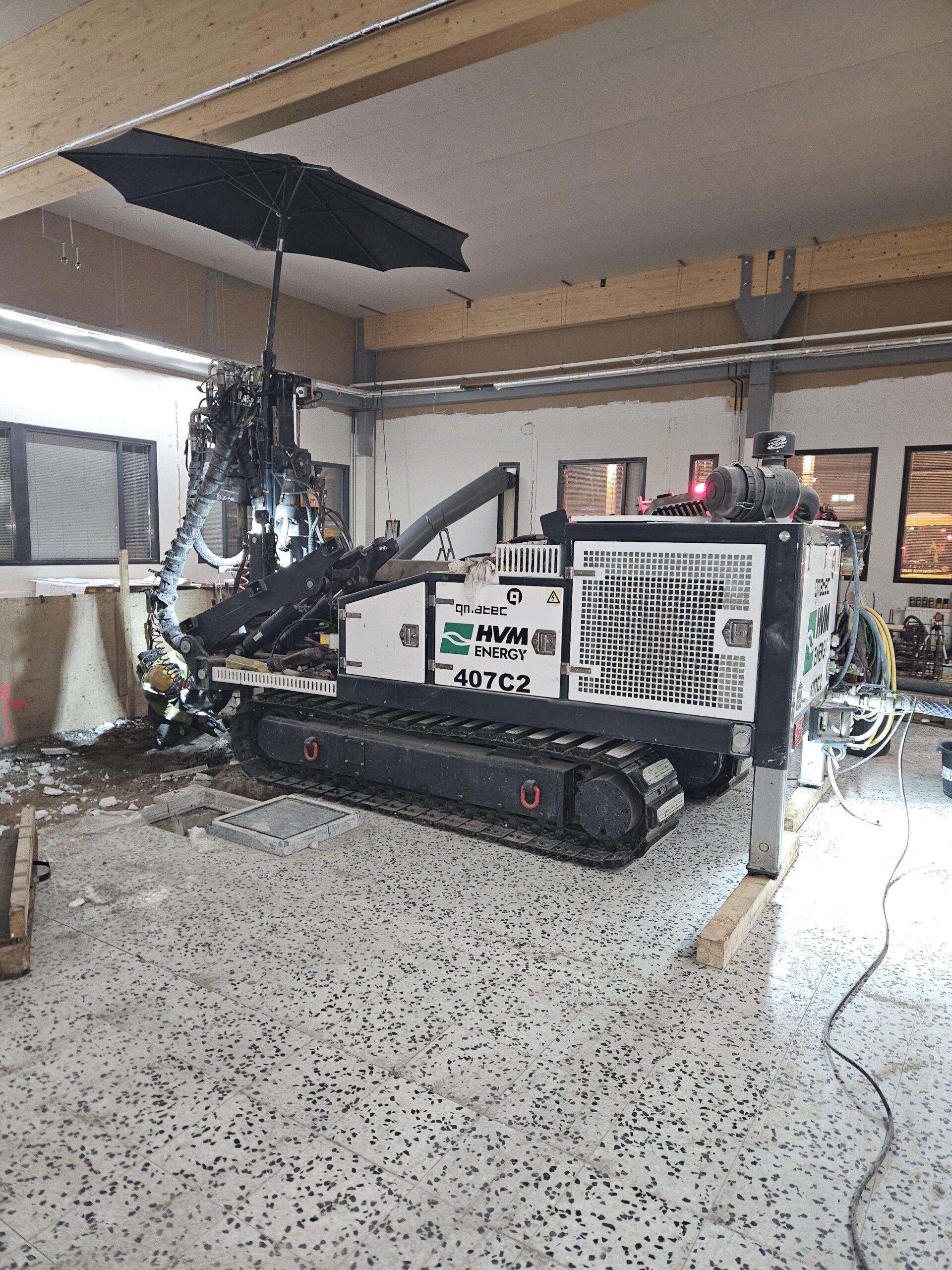
Our equipment can be used for drill piling in the size range 110-323 mm. Our drill rigs can be adapted to heights of up to 2.4 m, so drilling can also be carried out in confined spaces.
Anchoring
We use our own equipment to make the wire anchors to ensure the stability of the structures. Steel stud walls are often supported by braided anchors soldered into the rock. If necessary, we also support the bottom end of steel piles supported by rock bolts, i.e. root bolts. In addition, rock anchors can be used as vertical anchors, for example to support wind loads in wind turbines and tall buildings.
When is steel piling used?

Interested? We’d be happy to tell you more
Contact us and let’s talk about your project.

Jesse Kehusmaa
Frequently asked questions about steel piling
When is steel piling used?
Steel piling is used when the bearing capacity of the soil is weak or when the building needs a very strong foundation. The method is particularly suitable for clay, fill and beach areas, bridges and industrial buildings.
What are the benefits of steel piling?
Steel tube piling is a fast, accurate and durable solution. Steel piles can withstand high loads, do not require long drying times and allow construction to start immediately after piling. They provide a long-lasting and maintenance-free foundation.
How does steel pipe piling differ from concrete piling?
Steel tube piles are lighter and can be installed in confined spaces. They are very shock-resistant and can be installed accurately without much vibration.
What kind of equipment do you use for piling?
Our equipment is excavator-mounted, so we can drive piles into tighter spaces than with larger piling machines, if necessary. Our equipment can perform steel piling up to pile size RR320.
We drill in the size range 110-323 mm. Our drill rigs are also adaptable to heights as low as 2.4 m, so you can drill even in tight spaces indoors.